Work systems that fit human capabilities
Defining who does what, when and with whom, so every operator has a workload they can handle, in normal operation and when things go wrong.
Part of the HF engineering process · step 05 (staffing and qualification)Jobs designed around the people who do them
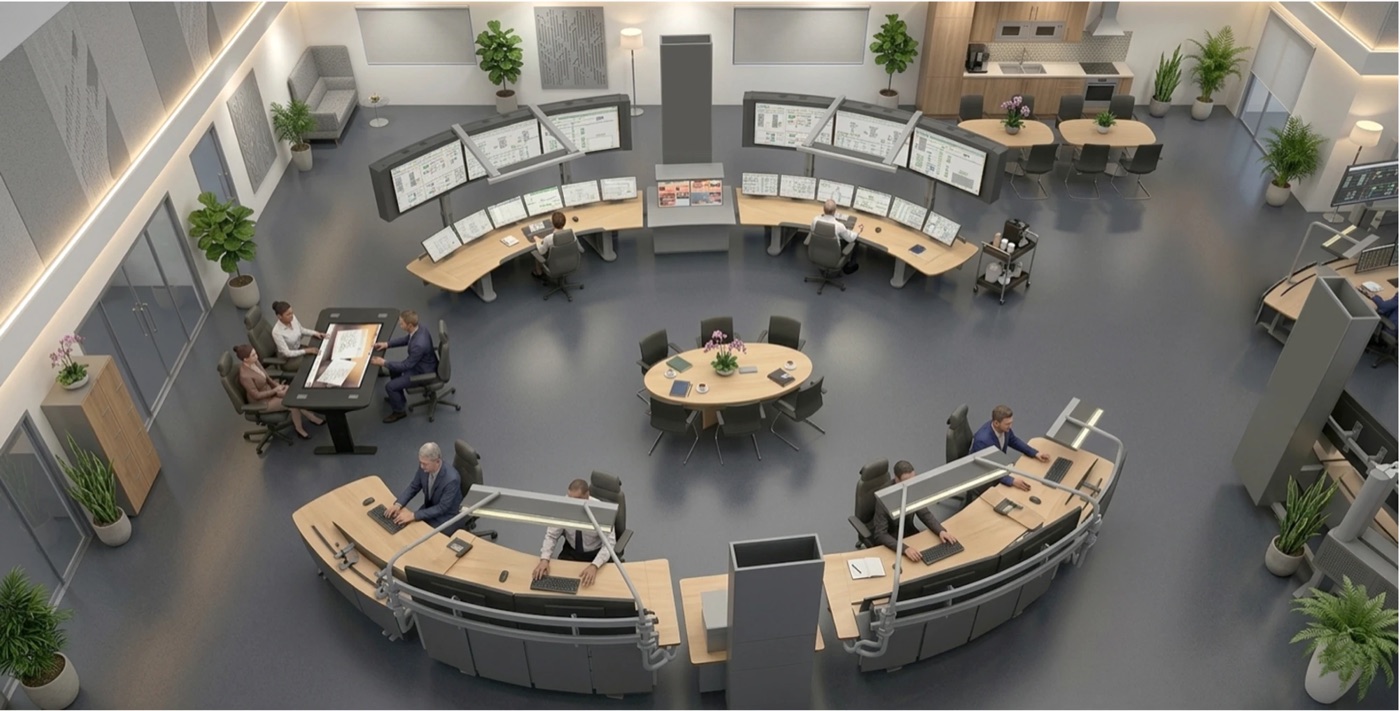
The goal is a work system that matches human capabilities, limitations and needs. When designing jobs and work organisation, identify:
- The lines of communication, internal and external
- The interactions between people
- Work permits
- Who does what in an abnormal situation
Shift handover and night shifts matter too
A control room runs day and night, and the time of day affects how well people perform.
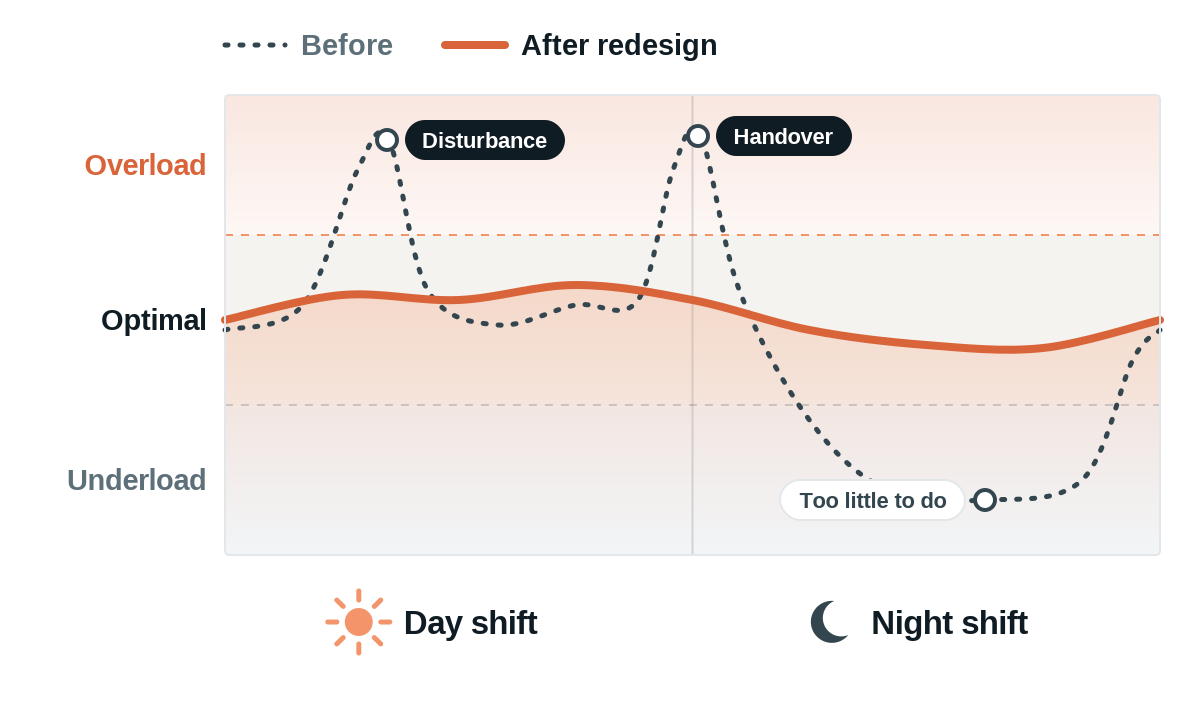
Workload is rarely even. Disturbances and shift handovers create peaks where operators have more than they can handle, while quiet night hours can leave them with too little to do and slow to react. By redistributing tasks between shifts and between people and systems, we help keep workload in the range where operators perform best.
Shift handover
A clear handover makes sure the incoming shift knows the state of the plant and any ongoing work.
Night shifts
Our circadian rhythm means that at night it takes longer to refocus during an abnormal situation.
Moving tasks to the day
Moving some tasks from the night shift to the day shift can help prevent incidents.
How we can help
We map the workload and workflow of each operator, involving all end users.
Task allocation
Dividing work tasks between operators and systems.
Task zones
Combining each task with its space and location requirements.
Work space
The space one or more people need to complete a task.
“Defining workload and workflow often reduces human error.”HF Specialist
Is the workload right for your operators?
Tell us how your control room is staffed and organised, and we'll help you find where the workload and workflow can be improved.