How we put people at the centre of design
Human Factors is a discipline that systematically involves end users in the design process. These are the methods we use to make control rooms, systems and services safe, efficient and easy to use.
Methods we use in every project
Interviews & questionnaires
We gather the experience and needs of operators, supervisors and maintenance staff directly from the people who do the work.
Workshops & focus groups
Interdisciplinary sessions where management, operators and engineers shape requirements and review design concepts together.
On-site observation
We study real operations on site, including tacit knowledge that is hard to put into words but essential to keep.
Function & task analysis
We define system performance, allocate functions between people and automation, and set task requirements.
Scenario-based risk assessment
We work through normal and abnormal scenarios to identify and evaluate risks and create a preventive action plan.
Iterative design & validation
Concepts in 2D and 3D are refined over several iterations with end users, then validated and verified against requirements.
The ISO 11064 ergonomic design process
Our projects follow the five phases of ISO 11064, with end users involved from start to finish.
In the video we explain how the standard guides control room design, from the first clarification to feedback from the room in use.

Clarification
We gather data and define the goals and the starting point of the project.
Analysis & definition
We turn the collected data into functions, tasks and requirements.
Conceptual design
We develop 2D and 3D concepts and review them with operators.
Detailed design
We write the specifications for construction and procurement.
Operational feedback
We validate, verify and learn from the control room in use.
Future challenges in the central control room
“In tomorrow's central control rooms, operators' roles will evolve from reactive to predictive problem solving and analytics.”
To get there, operators will need to be highly qualified and able to work with many specialist functions: IT/OT support, multifunctional, technical and remote support, asset risk management, alarm handling, safety, cyber security and maintenance management.
Read more in ABB Review →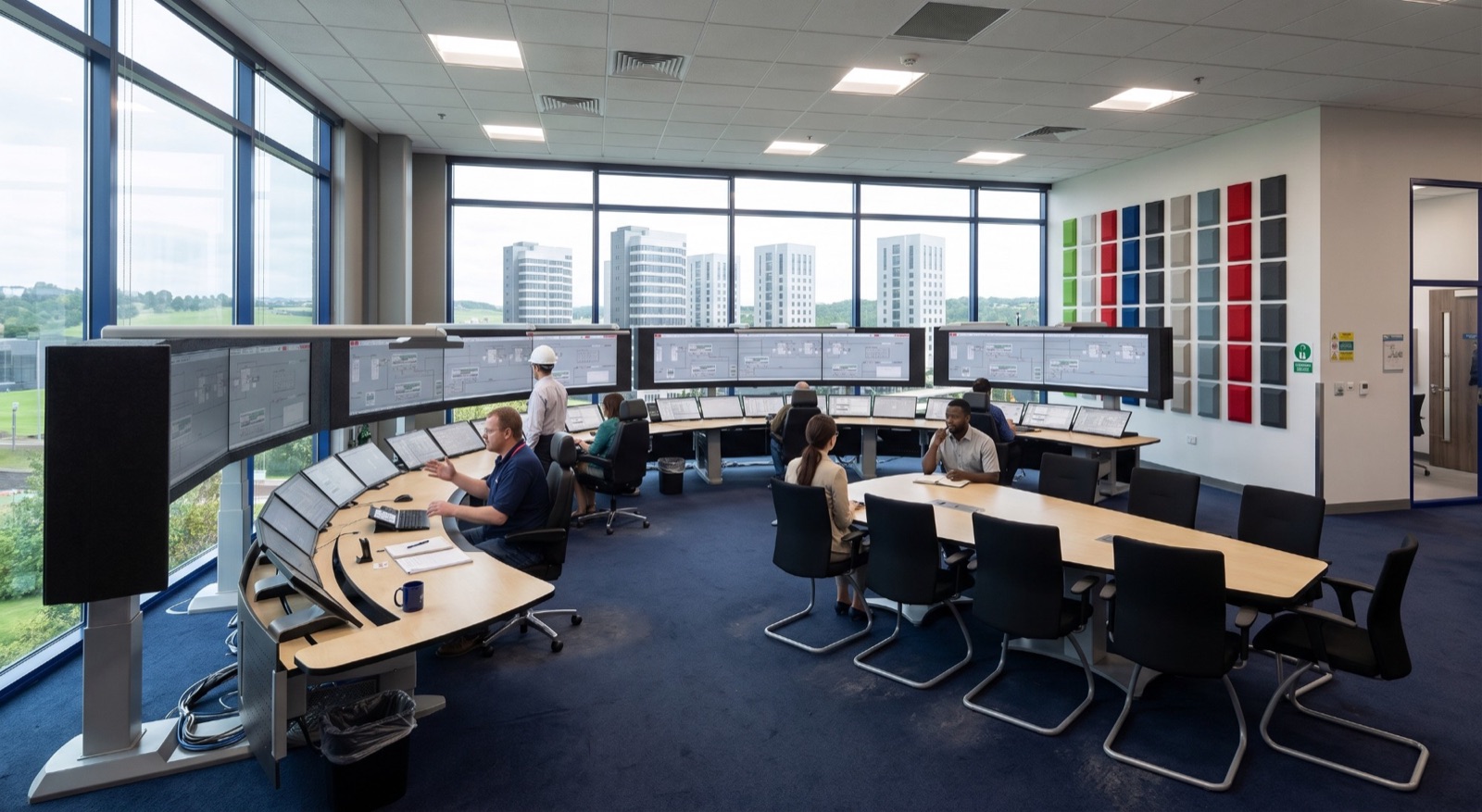
Need more than our core services?
We also offer UX design, training and courses, tacit knowledge capture, standardisation, product and service design, and work environment assessments.