Identify risk, evaluate risk, make an action plan
Centralising control rooms and adding automation changes the operator's job. We find the Human Factors risks before they become incidents.
Part of the HF engineering process · step 06 (safety-critical tasks)A new approach to risk management
Control room operations have changed. Industrial companies are centralising several control rooms into one central control room, automation has matured and costs must come down.
More automation often means fewer staff, and operators have moved from running the plant to observing and analysing it. That calls for a new approach to risk management.
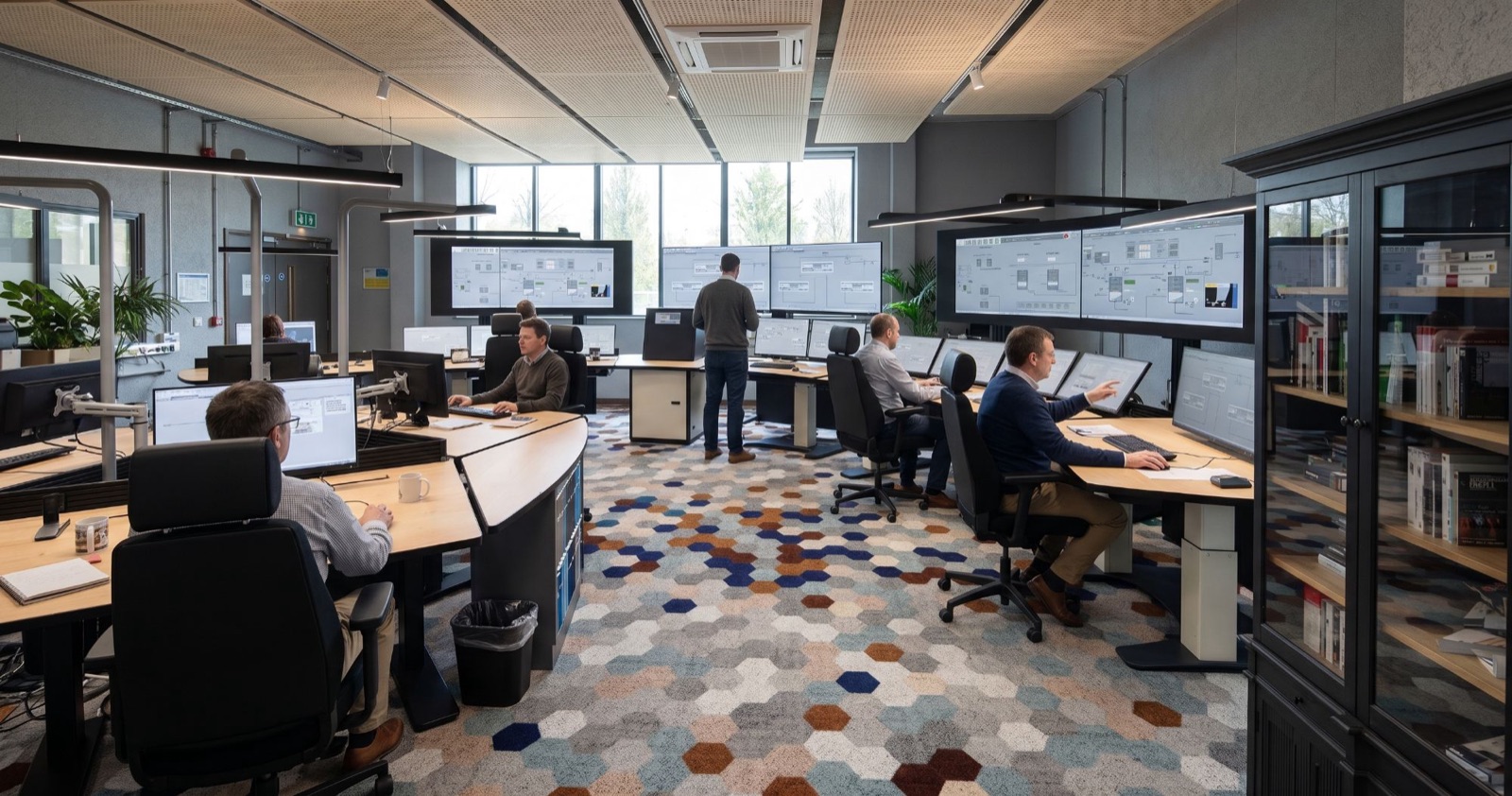
What operators lose in a central control room
Moving operators away from the plant removes much of what they used to rely on, and those changes need careful assessment.
Direct contact with the plant
Operators lose much of their ability to see, hear, feel (such as temperature or vibration) and smell what is happening. Instead they rely on technology and on other people to interpret the situation.
Tacit knowledge
Knowledge that is hard to transfer from senior to junior operators must not be lost along the way.
Noise and abnormal situations
Noise from communication and alarms, and how abnormal situations are handled, also need careful assessment.
How we can help
Centralisation often moves functions from operators to the DCS and may create or remove tasks. We identify and evaluate these risks and create an action plan, often using a scenario-based method.
Each risk is rated by how likely it is and how serious the consequences could be. The action plan then sets out the measures that bring every significant risk down to an acceptable level, so you can see exactly what changes and why.
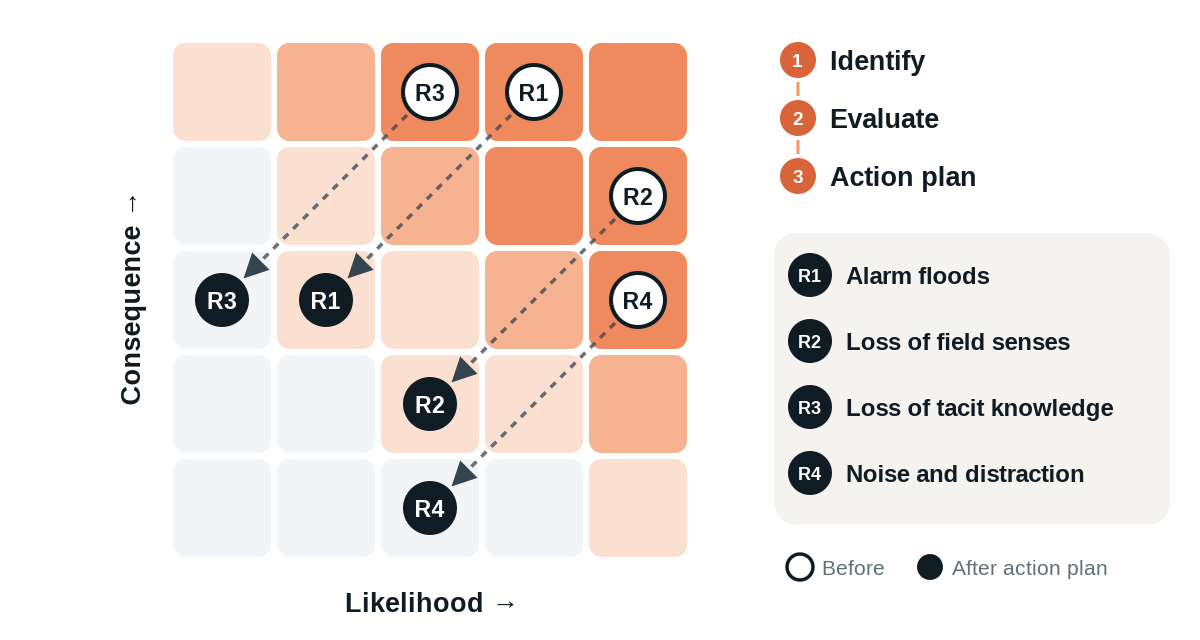
Identify risk
We work through normal and abnormal scenarios with your operators to find where things can go wrong.
Evaluate risk
We assess each risk to see which ones matter most for safety and operation.
Make an action plan
We set out the measures needed to reduce the risks in your future control room.
Perstorp: CCR risk assessment
Risk identification and assessment for merging several control rooms into one control centre. The assessment covered:
- Work environment and safety
- Communication and alarms
- Ergonomics
- Organisation and routines
- DCS and control systems
- Layout
Scenario-based risk assessment
We work through normal and abnormal scenarios to identify and evaluate risks and create a preventive action plan.
Risk assessment is preventive work that reduces human error in your future control room.
“Risk assessment is preventive work that reduces human error in your future control room.”HF Specialist
Merging control rooms or moving to a CCR?
Tell us about your plans, and we'll help you find and reduce the Human Factors risks before the new control room goes live.